Motivation for DIY glazes and underglazes:
This 2oz jar dries down to 21g of powder!
That is 75 cents/g (at 2025 prices)! Only half is actual stain powder. Before considering cost, note that the high water content of these is actually a benefit; the thixotropic gel has excellent brushing properties, enabling very thin layering. However, more than one layer is needed to achieve opacity and even color.
Because I am all-in on DIY, the elephant in the room is price. In one scenario, using encapsulated red stain and assuming 50% in my underglaze recipe, I calculated a 1500% saving (assuming the same specific gravity)! But it gets better. I make mine with a higher specific gravity and a much lower stain percentage (e.g. 20%) to get the same result. It goes on in one coat. I also fine-tune the degree of melt by adjusting the feldspar. And I optimize bisque hardness, and thus overpaintability, by adjusting the clay percentage. With my setup, I can weigh and make a 1-pint jar of underglaze in ten minutes.

Related Pictures
Rising prices are putting potters at a crossroads:
DIY and documented testing are your insurance
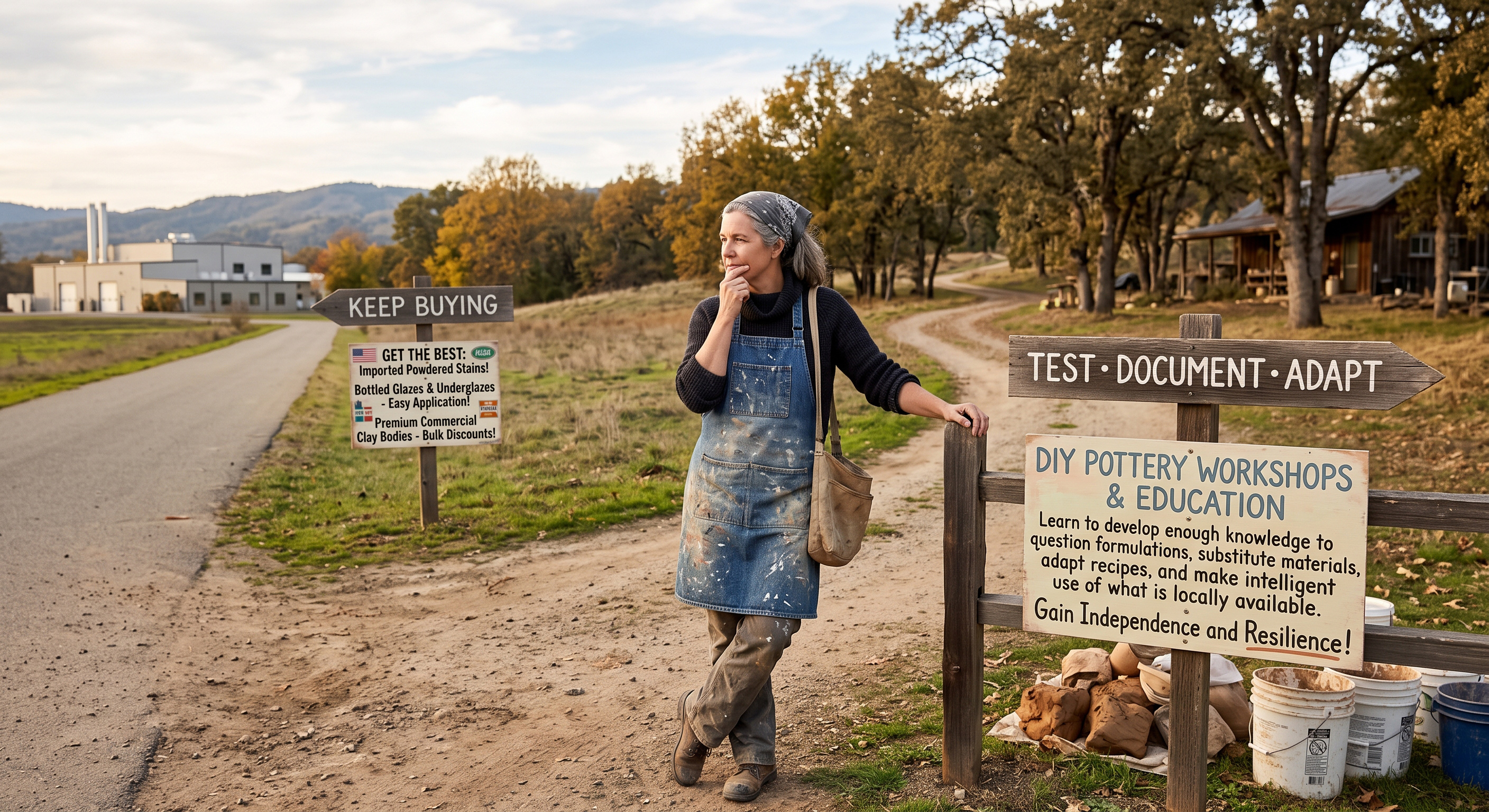 Generated at Gemini by submitting the text of this post AI Policy
This picture has its own page with more detail, click here to see it.
The ceramic materials we depend on are no longer commodities we can assume will always be cheap and available. Lithium materials can suddenly multiply in price. Cobalt colorants can double. A familiar plaster can disappear. Zircon and stains can jump with global mineral markets. Products made from these (e.g. glazes, underglazes) follow suit. And freight can make even inexpensive clay expensive.
The answer is not to stockpile everything—it is to learn how to adapt. A potter who tests, documents and understands materials can reduce cobalt, replace lithium, qualify a new plaster, reformulate around a discontinued feldspar, make better use of a local clay, and even make his/her own glaze and underglaze. Accumulated knowledge from ongoing testing becomes insulation against both inflation and disruption. Think of your test records as a savings account. Every melt test, firing schedule, recipe adjustment, clay test and photograph is a small deposit. When supply problems or price increases arrive, years of organized observations suddenly become very valuable, giving your choices and options others don't have.
Links
| Glossary |
Underglaze
Understand pottery underglazes: Why they brush differently, how they fire, why clears fail over them, and how to make your own recipes. In technical rather than art language. |
| Glossary |
Brushing Glaze
Hobbyists and increasing numbers of potters use commercial paint-on glazes. It's convenient, there are lots of visual effects. There are also issues compared to dipping glazes. You can also make your own. |
| Projects |
DIY Underglaze Development
I studied a range of underglazes to understand what they are. Instead, I found out what they should be and how DIY is the key to tuning the degree of fired maturity for my temperature, minimizing costs and tuning the working properties. |
 PayPal | No tracking, No ads, No paywall, No transient content! Just organized, concise information constantly updated and improved. Was this helpful? Consider supporting me. |
Got a Question?
Buy me a coffee and we can talk 

https://backup.digitalfire.com, All Rights Reserved
Privacy Policy