Raw diatomaceous earth. Is it a clay?
Or, more correctly, is this one a clay? The way I found out was to test it myself. That's what I did.
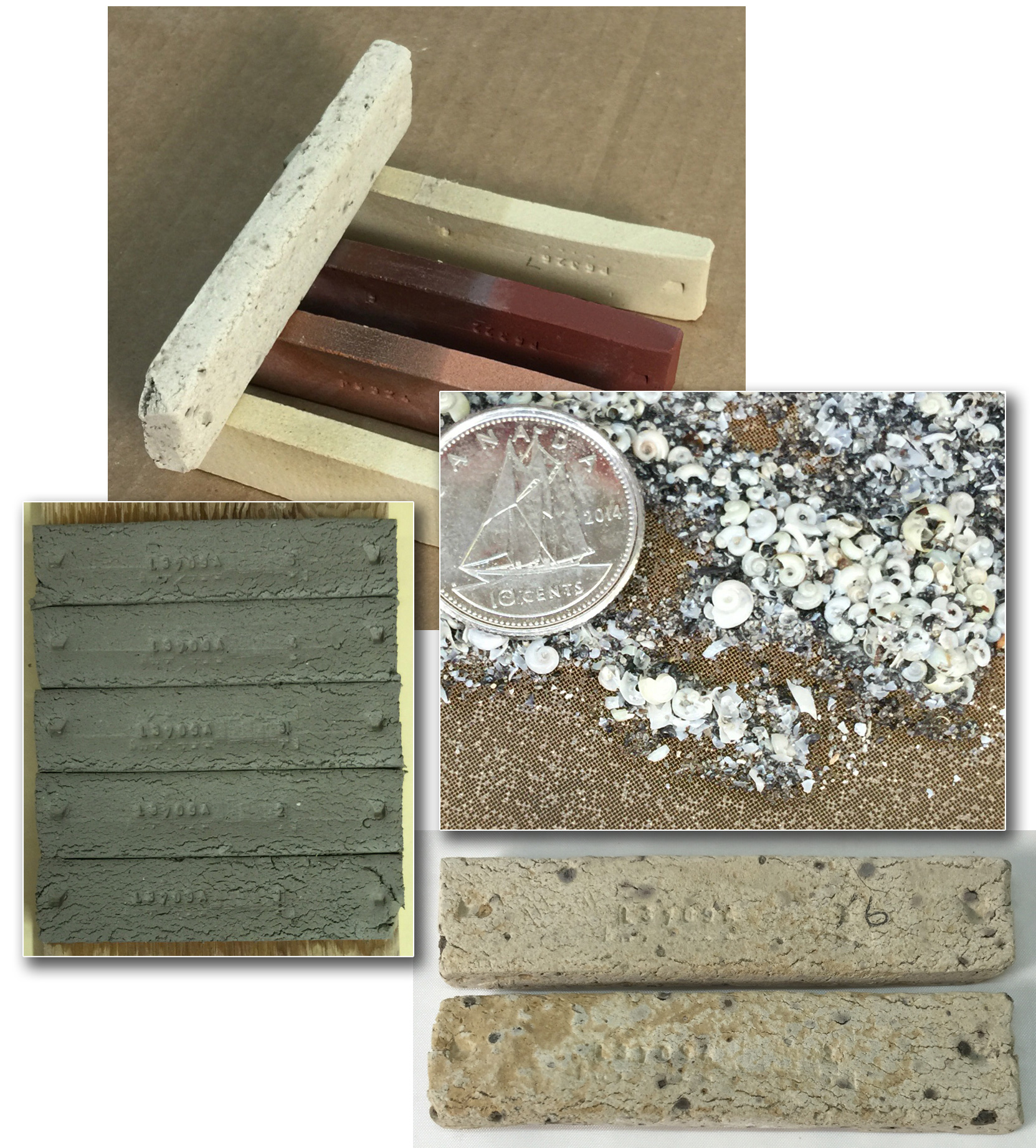
The giveaway of its marine origin is the tiny shells found on the sieve. The Cretaceous Sea once connected the Arctic Ocean with the Gulf of Mexico, covering the great plains of North America. Sedimentation left this deposit of Diatomaceous earth in central Alberta, Canada. This sample contains enough clay that I was able to slurry it up, dewater it on a plaster bat and then prepare SHAB test bars to try it at five temperatures. At cone 10 (bottom right) the porosity is 62%! And the LOI is 32% (others can go as high at 50%). Why? Raw diatomaceous earth contains physically bound interlayer water, it leaves by ~100–300 °C. It also contains structural hydroxyl water (in clay minerals or hydrated silica phases). This “chemical water” burns off between ~400–700 °C. And, organic matter from ancient algae, plants, or soil contamination also burns out between ~300–800 °C (as CO₂ and other gases). Finally, the carbonates (e.g. shells shown here) decompose around 700–900 °C, releasing CO₂. That alone can cause a big weight loss.
Note the test bars under it. Where this bar was sitting there is glassy deposit. What is that? Diatomaceous earth is mostly amorphous silica, but it almost always contains alkali and alkaline-earth impurities and sometimes boron. The latter can literally drain out, as a liquid. However here, the alkalis have volatilized (vaporized) or form alkali-rich fumes. These landed on nearby surfaces to react with the other test bars to form a thin alkali-silicate glass layer (similar to what happens in soda firing).
Related Pictures
Step 4: Pour it through a 30 mesh screen

This picture has its own page with more detail, click here to see it.
Plastic sieves are available at any ceramic supply store. Better metal ones can be purchased on Amazon or eBay (shown in the inset). I 3D-print supports to mount these on two-gallon buckets. Most sedimentary clays would go right through a screen like this, with little or no residue remaining. But coaxing this particular slurry through the sieve took considerable effort; I had to use plenty of water. Balls of plastic material formed as I brushed (which means this material is a combination of fine-particled clay with much coarser mineral grains). The lesson appears to be: The simple act of trying to sieve this clay through 30 mesh revealed the difficulty that manual DIY processing would present if it were used in any kind of production. That being said, a vibrating sieve could change that.
Links
| Materials |
Diatomaceous Earth
|
 PayPal | No tracking, No ads, No paywall, No transient content! Just organized, concise information constantly updated and improved. Was this helpful? Consider supporting me. |
Got a Question?
Buy me a coffee and we can talk 

https://backup.digitalfire.com, All Rights Reserved
Privacy Policy