Rutile Blues - Almost every single stoneware potter uses them
These are made from Canadian materials and recipes
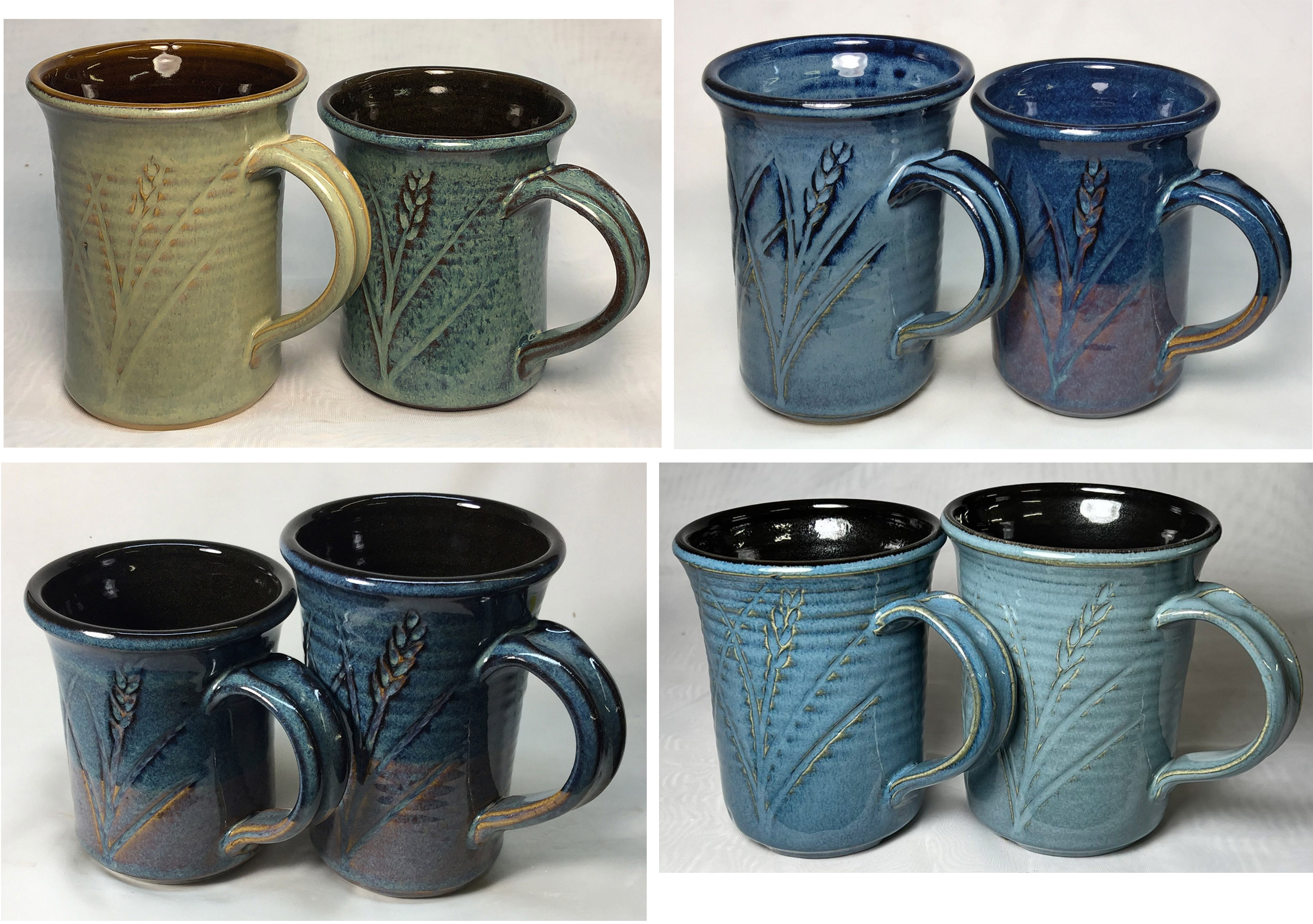
There is a lot of magic, Canadian magic, in this picture. Pretty well every single potter working at mid-temperature needs rutile blue, gloss black, honey amber and transparent glazes (even multiple versions of each). And almost all need a base slip (or engobe). Here they are.
Upper left: GA6-C and GA6-B on light and dark burning bodies.
Upper right: GR6-M and GA6-C on M340 (with black engobe L3954B).
Lower left: GA6-C and GA6-B on M340 (with black engobe).
Lower right: GR6-M, G3914A, G2926BL on slow and fast cooled mugs.
Every glaze company makes multiple variations of each of these, especially rutile blues (or floating blues). Unfortunately, they often do not fit Plainsman Clays. But these do, in fact, they are adjustable (and better in other ways, as well as less expensive). Plainsman Clays mines and makes most of the raw materials, this is a great opportunity, hopefully soon realized.
Links
| Typecodes | Plainsman Next Chapter |
 PayPal | No tracking, No ads, No paywall, No transient content! Just organized, concise information constantly updated and improved. Was this helpful? Consider supporting me. |
Got a Question?
Buy me a coffee and we can talk 

https://backup.digitalfire.com, All Rights Reserved
Privacy Policy