This bird knows how to find and use wild clay:
If she can do it, maybe you can
She is likely getting it from nearby. She knows what works: A mix of sand, clay and organic matter. She isn't even the best mud-nester in the bird world. Some species can stick their nests on to walls and cliffs.
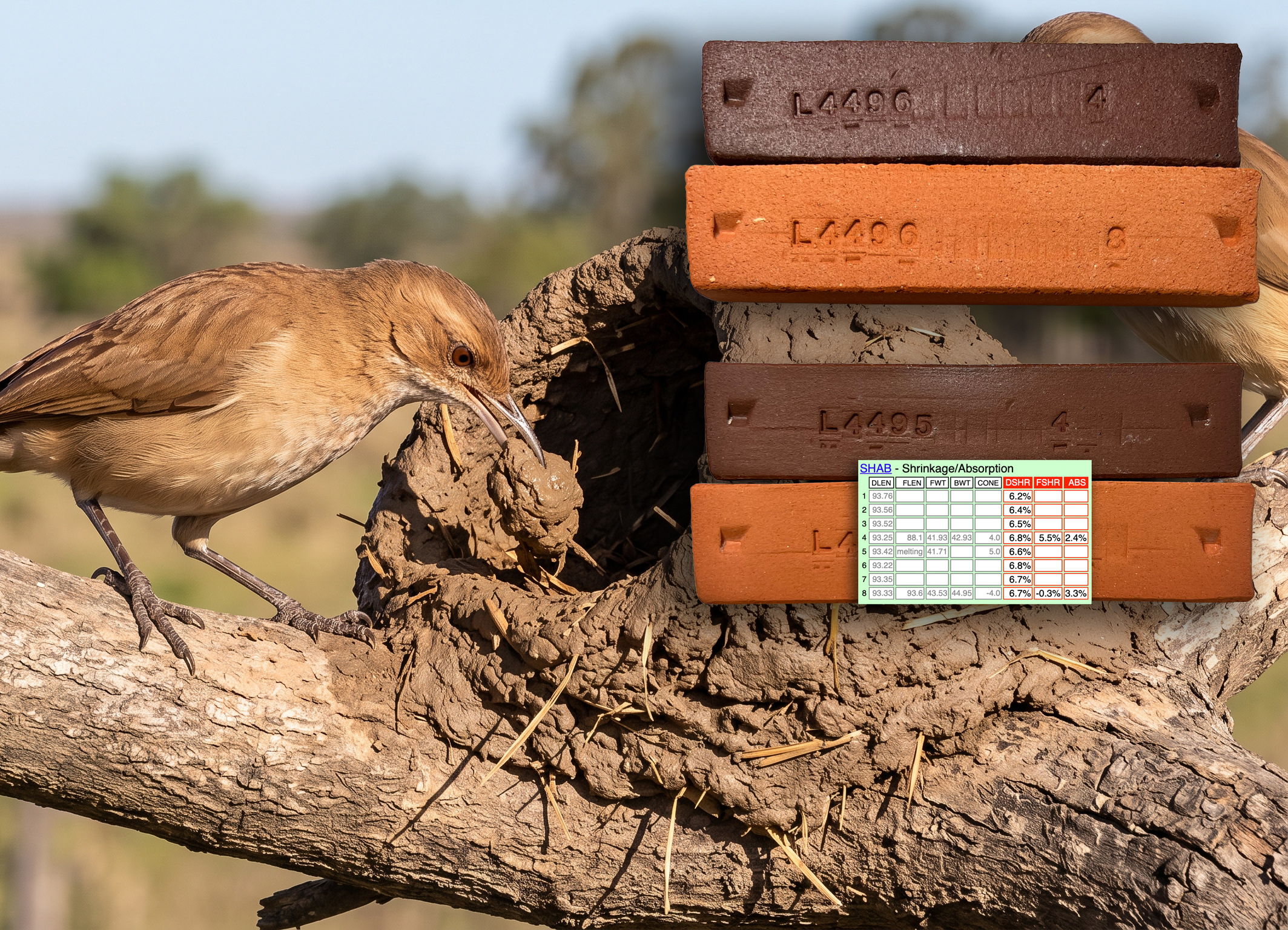
If a bird can find and use a native clay, should a potter or even hobbyist be intimidated by the prospect of doing the same? She doesn't overthink it; she likely just samples different spots and uses the one that works the best. The clay appears to be a typical terracotta; if her nest were fired, it could well come out like these overlaid SHAB test bars (the two types, a sandy and smooth, were fired at cone 4 and 04).
Finding a native clay for pottery can begin just as simply: collect small samples from different spots, see how each one works, and watch how it dries. Then take the step the bird has no reason to take—fire test bars. These show how I compare drying shrinkage, firing shrinkage and fired absorption. A nest proves that mud can be built with. Test bars help determine what that mud can become in a kiln.
Links
| Projects |
Evaluating a clay's suitability for use in pottery
Would you like to be able to use your own found-clays in your production? Follow me as we evaluate a mystery clay sample provided by a potter who wants to do this. |
 PayPal | No tracking, No ads, No paywall, No transient content! Just organized, concise information constantly updated and improved. Was this helpful? Consider supporting me. |
Got a Question?
Buy me a coffee and we can talk 

https://backup.digitalfire.com, All Rights Reserved
Privacy Policy