URL: Factory worker glazing bisque-fired plates by spinning and dipping
Click the link below to go to this page
https://www.instagram.com/reel/Db6gU0fCuMZ
Their process involves using a thixotropic glaze slurry that dries incredibly fast.
Related Information
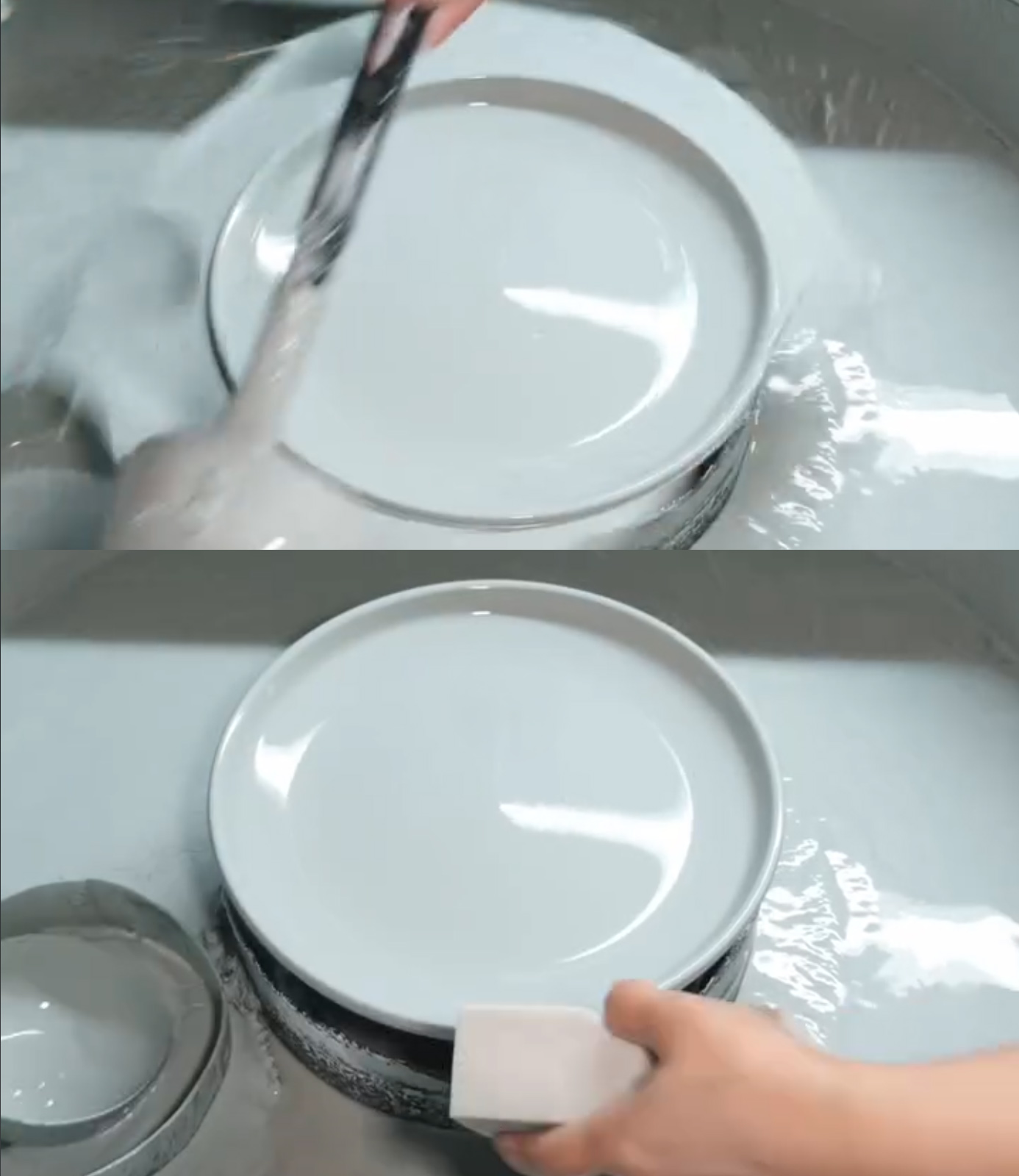
Spin-glazing bisque-fired plates in a factory
This picture has its own page with more detail, click here to see it.
These plates are made at the HomeVSS factory in China. The plate is placed on a soft rubber-surfaced spinning wheelhead that is rotating fast enough that a ladle full of glaze poured into the center is expelled within a second and dries within four seconds. At the two-second mark, a sponge is used to catch drips and even coverage on the lip. The thixotropic character of the glaze enables the quick drying (since no CMC is needed). The plate is finished by a follow-up bottom-dip, using a suction cup holder. Finally, the lip is finished using a brush with the same glaze slurry. Watch this on Instagram using the link below.
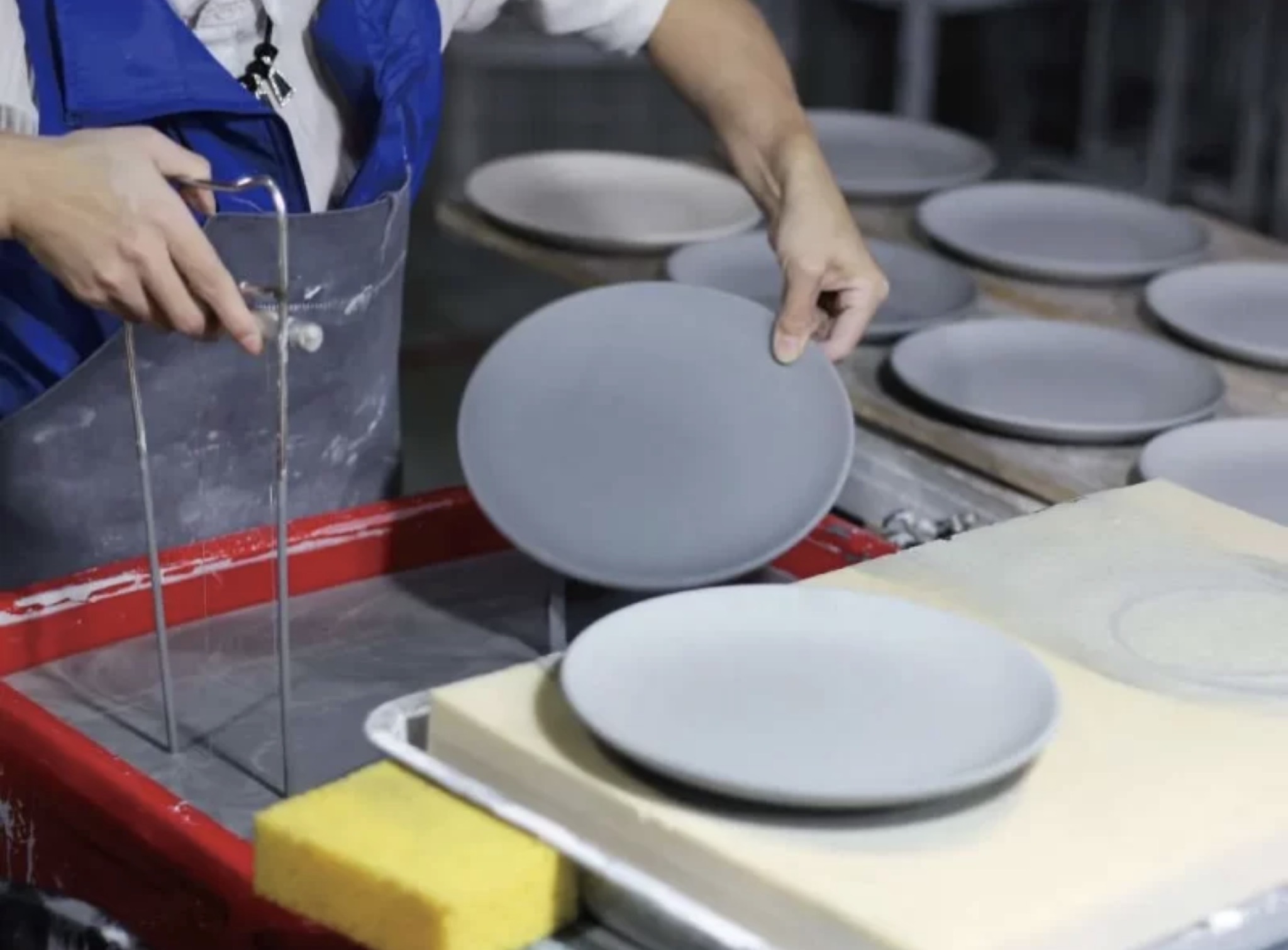
Factory workers use the same techniques as potters
This picture has its own page with more detail, click here to see it.
The myth of modern ceramic manufacturing is that everything is automated by advanced robotics. In reality, commercial production relies heavily on human artisans who execute the same fundamentals as studio potters—jiggering, slip-casting, wax-resisting, fountain-glazing, and brush-banding—at astonishing speed and muscle memory. The constantly moving conveyor belt is a key.
Rheology Control: Some slurries are highly thixotropic while others are thin and watery under constant agitation. Workers dip, spin, and extract pieces in seconds without runs, drips, or extended drying pauses.
Custom Tooling: Instead of standard shop tongs or studio brushes, workers rely on single-point holding tools, custom wire dipping tongs and painting and stamping sponges.
Hybrid Workflows: High-speed production pairs human dexterity with mechanical momentum, worker pairing spinning sponge tables for rim finishing with rapid fountain glazing for interior coverage.
Rapid Jiggering: Workers turn large masses of soft clay into uniform cups or bowls in seconds using jigger wheels equipped with plaster heads and precision-fit 3D-printed liners.
Handle Preparation: Custom plaster holders and specialized blade cutters shear slip-cast handles to exact vessel contours instantly, bypassing hand-trimming.
Glazing & Surface Techniques
Fountain & Dip Glazing: Specialized setups allow workers to fountain-glaze the interior and rim while simultaneously dip-glazing the exterior in contrasting colors.
Specialized Tongs: Custom wire dipping tongs allow workers to grab freshly dried glaze borders on large items like casseroles or platters without leaving fingerprint marks or disturbing the coat.
Direct Screen Printing: Draping a silk screen directly around a rounded mug and scraping ink through via a hand rubber scraper achieves detailed surface decoration in a single pass.
Links
| URLs |
https://homevss.com/collections/plates
HomeVSS tableware factory in China Crafting high quality table ware since 1990. |
| Glossary |
Dipping Glaze
In traditional ceramics and pottery dipping glazes can be of two main types: For single layer and for application of other layers overtop. Understanding the difference is important. |
 PayPal | No tracking, No ads, No paywall, No transient content! Just organized, concise information constantly updated and improved. Was this helpful? Consider supporting me. |
Got a Question?
Buy me a coffee and we can talk 

https://backup.digitalfire.com, All Rights Reserved
Privacy Policy